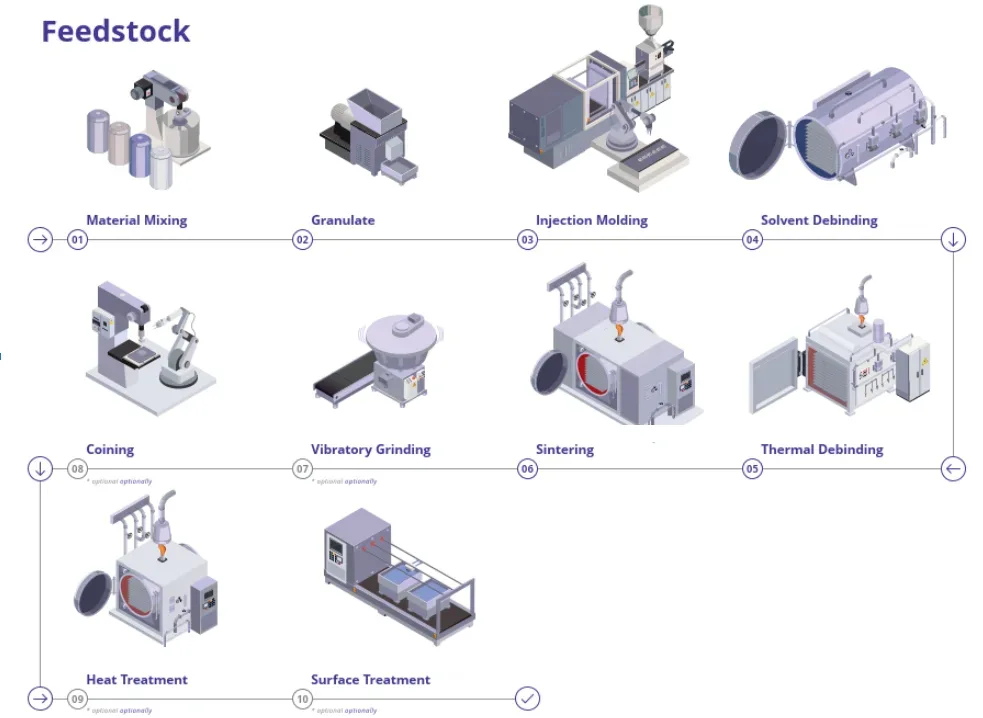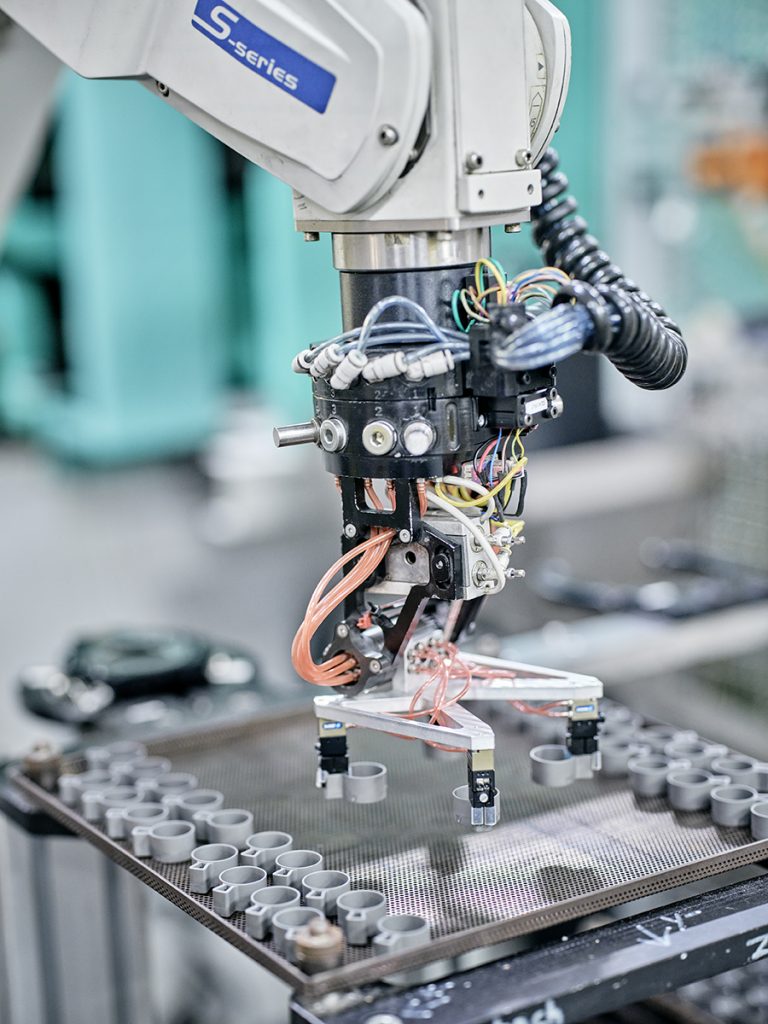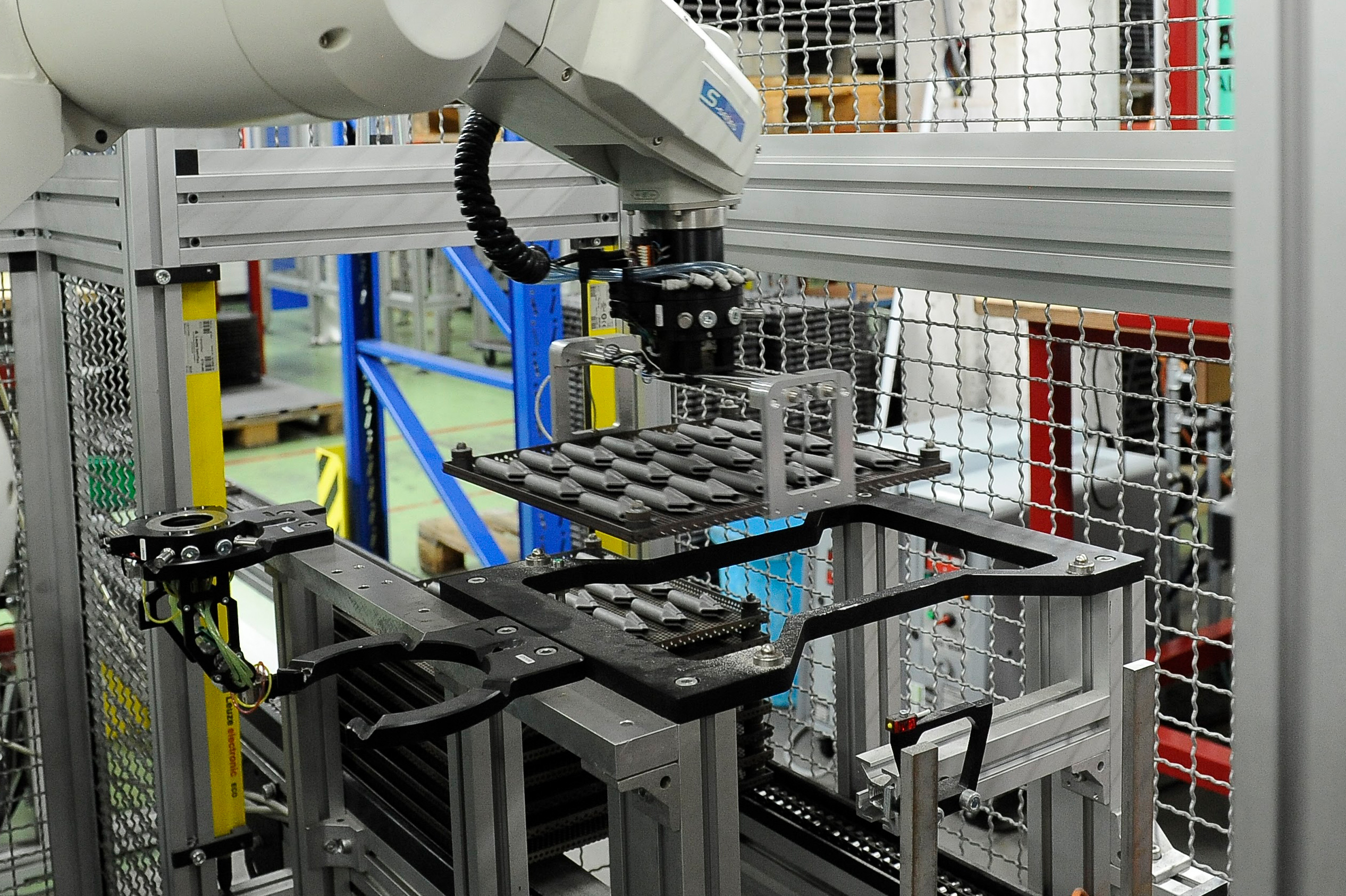


The MIM and microMIM process explained.
MIM (Metal Injection Molding) is an innovative highly cost effective process for the production of high spec, complex metal parts with small and micro dimensions.
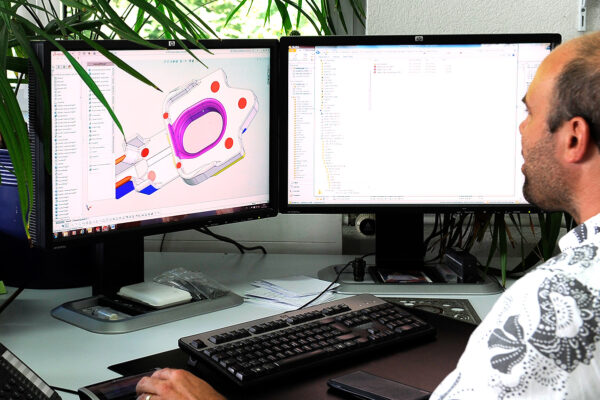
Vital to the MIM (Metal Injection Moulding) Process is the design and manufacture of a custom injection mould tool, which should have high abrasion resistance, due to the abrasive effect of the MIM powder mixture (feedstock).
This technology, which has been known and well-tried for many decades, enables the production of complex parts out of plastic. Thanks to the use of tools with sliders, it is possible to produce parts with undercuts. In the injection process, synthetic granules are melted then in liquid state injected into steel moulds under high pressure. After solidification the finished part can be removed. Injection moulding revolutionized shaping in the synthetic field and is indispensable in industrial manufacturing.
This technology has also been in use for decades, in order to produce, metal parts out of metal powders with different compositions. Firstly, metal powder is pressed into a mould under high pressure. After this, a “green” compact is obtained. This compact then undergoes a high temperature heat treatment, where the metal particles merge via diffusion. Thus, a stable metal part is formed, which matches the shape of the pressing tool. Thus, providing a commercial process for producing simple metal parts.
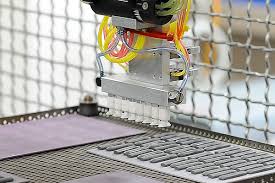
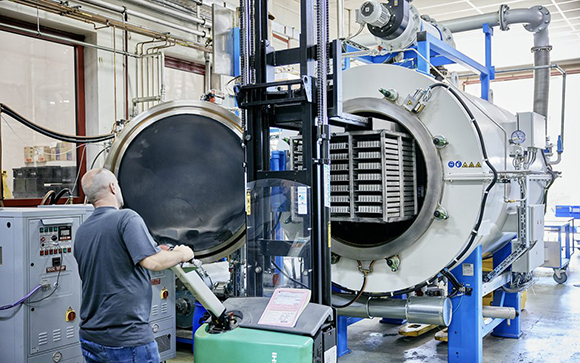
In the Metal Injection Moulding (MIM) Process an injectable, pasty mass is created using very fine metal powder and synthetic materials. The metal powder takes up + 90% of the weight. This material is then processed to form parts using an injection moulding machine. Just like in the plastic injection moulding process. Thereafter, the synthetic portion of the part, which enabled the shaping in, is removed, without the part losing its shape. In a following step, the parts are sintered and obtain the desired properties, particularly a high density and strength.
With the MIM process very complex parts can be produced which require little to no additional working.
Undercuts, which are not possible with the conventional P/M sintering method, can be produced using MIM (Metal Injection Moulding) without difficulty.
In contrast to the conventional press and sinter, where usually densities of about 90% of the theoretical raw material densities are achieved, MIM (Metal Injection Moulding) components densities between 96% and 100%.
Thus, material properties are attained, which extensively match those of parts that have been manufactured by machining from bar stock.
An key characteristic of the Metal Injection Moulding (MIM) process is the possibility to create highly sophisticated alloys using particular powder mixes; something that cannot be done at all or only with very high costs using more traditional metallurgical processes. A good example for this would be alloys for example with an exactly defined thermal coefficient of expansion.
The surfaces of MIM (Metal Injection Moulding) parts are superior to those of precision casting parts.
Even without the polishing treatment, a surface roughness < 1.2 can be achieved.
Thus, handling and polishing expenses can be eliminated or reduced considerably.
The Metal Injection Moulding) MIM process allows us to achieve tolerances commonly better than ± 0.3% of the desired size, without post-processing.
This means that with extremely small parts, a tolerance of around a hundredth of a mm can be achieved.
When working with parts that have very narrow tolerances or bigger dimensions, coining or post-processing may be necessary.
Since Metal Injection Moulding (MIM) parts normally do not require mechanical post-processing, the harder a material is to machine, the greater the advantage offered by the MIM Metal Injection Moulding process. This applies especially to stainless steel, soft magnetic alloys, and iron/nickel materials, but also to tool steels and special alloys.
All hardening processes can be applied to Metal Injection Moulded (MIM) parts offline, just like with comparable solid materials.
All the surface treating processes like for example nickel-plating, hard chrome plating, etc. can be applied as well.
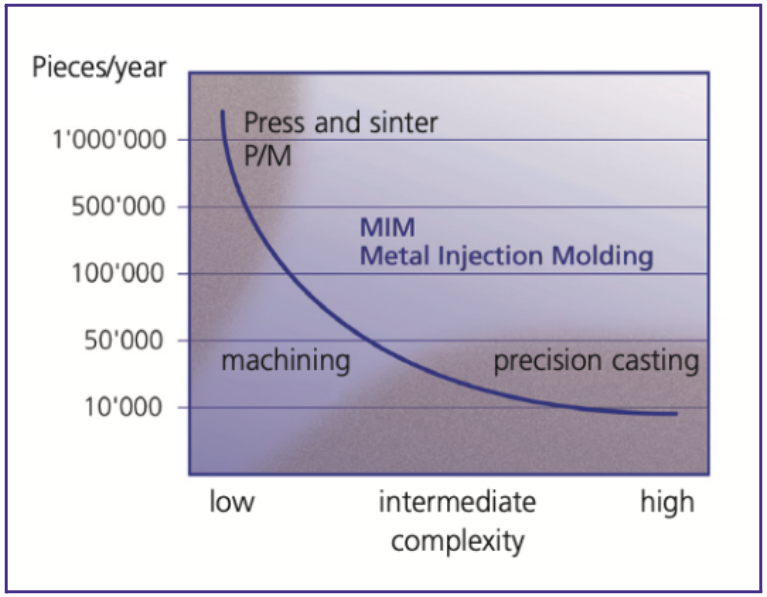
The MIM (Metal Injection Moulding) Process is most relevant where the requirement is for small, tight tolerance parts with good mechanical properties and surface finish.
Set against small cast parts for example MIM (Metal Injection Moulding) can provide finished parts without the need for post machining operations
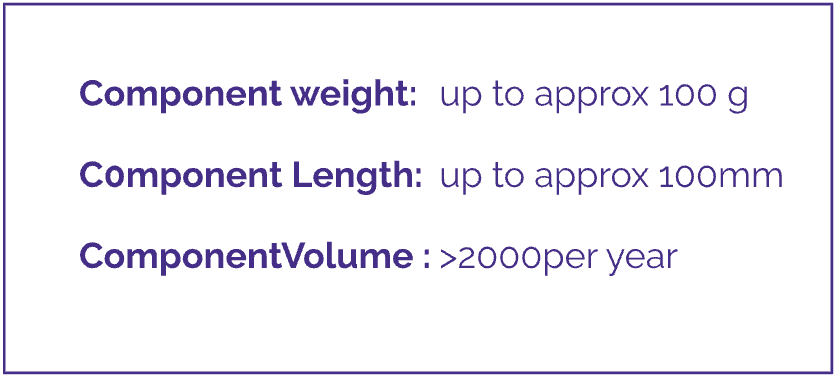
With very small parts for example <20g where machining from solid can be difficult and costly MIM (Metal Injection Moulding) can be a cost-effective route for design
Where for example Sintering is not applicable because of the complexity of the part MIM (Metal Injection Moulding) offers a real option.
As mentioned above where machining can be challenging due to the grade of material MIM (Metal Injection Moulding) offers a workable option
GREAT WESTERN ROAD
GLASGOW G156UT
SCOTLAND , UNITED KINGDOM
Land Line :00 44 (0)141 237 9247
Mobile : 00 44 (0) 7901635054
hcampbell@parmaco.com